
Finding a partner to practice daily with is hard
Kotekan needs two players interlocking. Coordinating schedules with a teacher or partner means most days, you don’t practice at all.
Mount your phone above your gangsa. Kotek guides your strikes, listens to check your timing, and plays the interlocking kotekan part alongside you.
Physical gamelan produces loud resonance and fast hand damping. Kotek pairs computer vision with acoustic spectrum analysis for zero-latency, error-free strike detection.
Vision AI
Camera Feed · 60 fps
Uses your phone’s camera to detect physical bilah (keys) and track mallet movement, determining the exact key being struck.
Audio Analyzer
Acoustic Onset · <6ms
Trained on the unique harmonic voice spectrum of bronze gangsa keys to detect the precise microsecond trigger and onset of each strike.
Vision identifies the key, while audio detects the exact microsecond hit. Together, they eliminate false triggers with zero perceptible latency.
Gamelan was never meant to be played alone, but finding an instructor or a partner to play with is not easy, and that makes practicing feel almost impossible.
Kotekan needs two players interlocking. Coordinating schedules with a teacher or partner means most days, you don’t practice at all.
Notes and patterns are passed down from mouth to mouth. Finding them is tiring and time-consuming, so you waste the time you’d rather spend playing.
Don’t let unnoticed mistakes become a habit. Kotek guides you to play with the correct timing and accent.
Keep waiting on a partner and a resource, and you will never practice.
Improve your playing by making daily practice easier to start.
Create new kotekan patterns and spread them to community members.
Get hands on gamelan without waiting for ensemble time or a full instrument set.
 Community Collaboration
That is what Mekar Bhuana means, and it is the hope behind it: that Bali’s oldest music and dance become known again, at home and beyond it. In developing Kotek, we worked alongside Mekar Bhuana to understand how gamelan is truly taught, heard, and preserved.
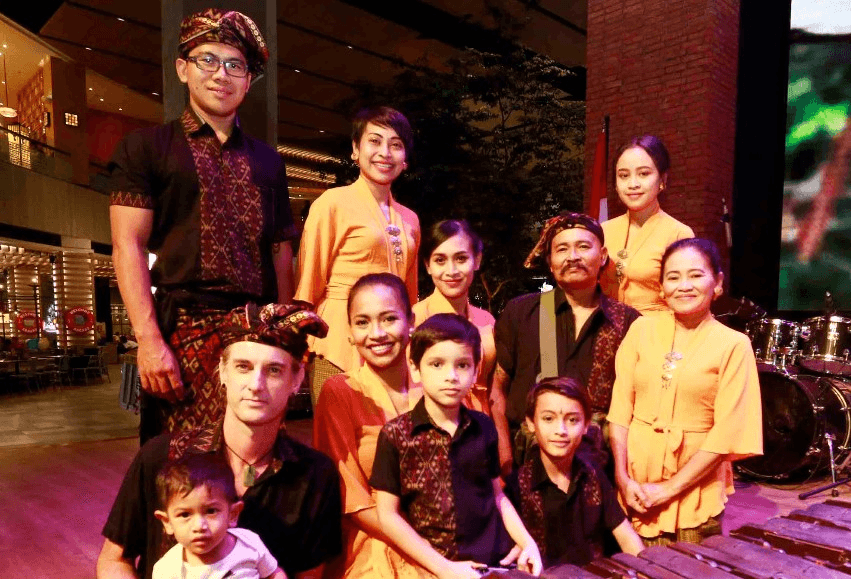
A family-run centre in Denpasar that documents, reconstructs and repatriates endangered classical gamelan. Vaughan Hatch founded it in 2000 around an antique Semara Pagulingan he restored, having found how few classical ensembles were ever recorded. Putu Evie Suyadnyani, a Legong dancer, brought the dance in 2004.
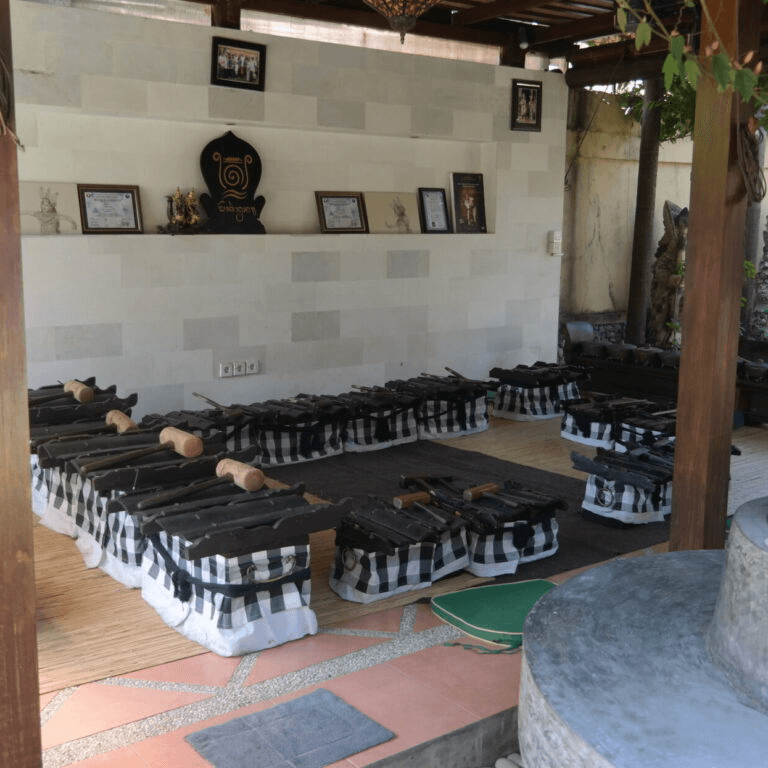
Twenty-seven gamelan sets: twenty-two in Bali, five at Mekar Bhuana Aotearoa in New Zealand. Among them a Semara Patangian in the old key order that exists nowhere else outside Bali, and Semara Kirang, an Angklung set from Lombok restored in 2019.
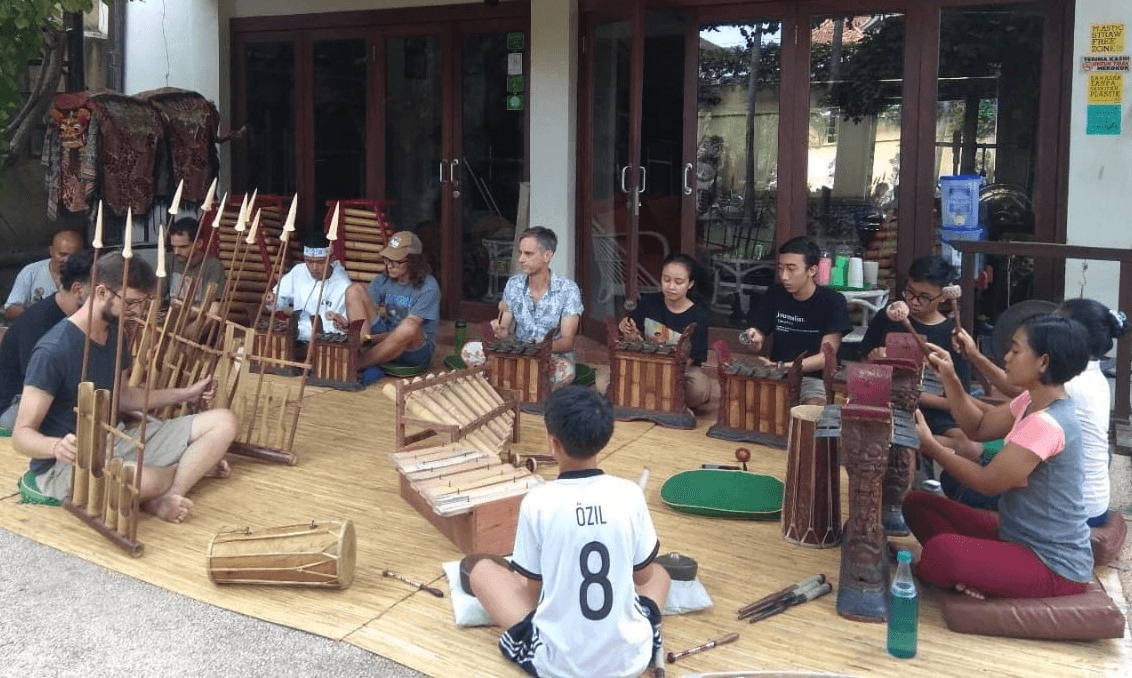
Lessons, workshops and cultural immersion, led by English-speaking experts including a native-speaking ethnomusicologist. The centre is a family home, so there are no walk-ins — book by email two weeks ahead.
Explore their archives, recordings, and workshop offerings at balimusicanddance.com
Visit Mekar BhuanaBeginner to expert patterns help you improve at your own pace. Step up to a higher difficulty when you are ready.
CHOOSE YOUR KOTEKAN
Lvl 4
Babaru
Level 1 · Telu family
Ubitan Nyendok
Needs 8 keys
Lvl 2
Kabelet
Swipe to hear another
Different configurations to match your play style. Choose one of the kotekan roles, then let Kotek play the other to create a harmonious interlocking pattern.
Polos on the beat, sangsih between. Take a half; the app plays the other.
Behind the scenes, a machine learning model detects your key hits and outputs a score that lets you track your improvement.
Result
Ngecog · Polos · 1×
Accuracy
92.4%
Your best is 88.1%
Mistakes
3
Your gangsa
Ksatriainterlocking at tempo
26.400 notes landed · 13.600 to Brahmana
Turn hours of hunting for resources and matching schedules into a practice space that’s ready when you are.
An interactive interface and game-like cues make playing gamelan exciting.
Every session is scored, so the progress you can’t feel day to day becomes something you can see.
Keep the culture alive by getting people to play without hassle, and help communities flourish at the same time.
We’ve answered the questions people ask most often about Kotek.
You’ll need a physical instrument to practice on. Kotek is built for playing on a real instrument, because that’s how it can help you build muscle memory and get the feel of it in your hands. You’ll also need a tripod or stand to hold your phone above the instrument, camera pointing down, so both of your hands are free to play.
Kotek is built around the gangsa of the gong kebyar family, an instrument with bronze keys over bamboo resonators, played with a single mallet while the left hand damps. It ships with a calibrated profile for that instrument, and because every village tunes differently, the app is designed to be calibrated per instrument rather than assuming a standard tuning.
Yes. Practice mode is the default for first-time players. There’s no score and no fail state: Kotek waits for you to hit the right key before moving on, and you can slow the tempo down until the pattern sits in your hands. Scoring only comes in when you decide you want it.
Make your learning interactive and fun. Start your gamelan journey with Kotek.
Download on theApp Store